
Start Writing Your Awesome Blog Post
I was on a call with a founder last week. He’d spent the weekend shipping a new version of his blog, pushed it around 11pm Sunday, and woke up on Monday to a Slack thread titled “why did traffic drop.”
Not a dramatic drop. A quiet one. The kind you don’t notice until your chart looks like it’s trying to be polite about bad news.
The posts were good. The writing was real. The ideas were sharp.
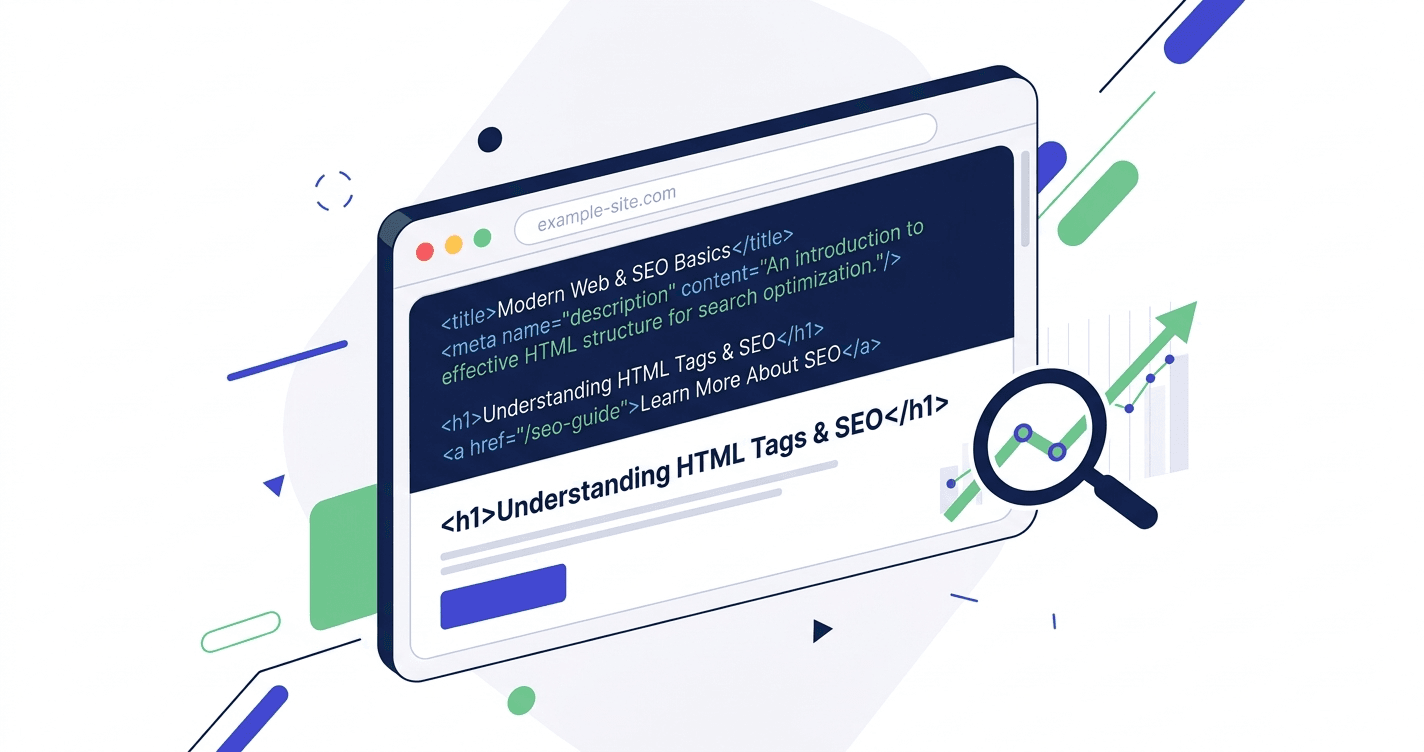
But the pages were messy in the one place that matters when you’re trying to be discovered. The HTML structure was telling an unclear story. SEO Starter Guide
A few articles had duplicate title tags that made different posts look identical in search results. Title Links A few had headings that were basically design choices, not structure, which meant the heading hierarchy was quietly lying. MDN Headings Some important posts weren’t linked from anywhere meaningful, which made internal linking feel like an afterthought instead of a strategy. SEO Starter Guide One template shipped with a placeholder meta description, and nobody noticed because everything “looked fine.” Snippets
And the founder laughed about it. Not because it was funny. Because the only other option was opening a new tab and starting a spreadsheet.
I told him he’d officially made it. You’re not a real blogger until you’ve shipped something great that search engines can’t quite categorize. How Search Works
The magical demo is the easy part. The boring, unglamorous, slightly irritating part is where the craft lives. SEO Starter Guide
So in honor of that founder, and in honor of everyone who has ever updated “just one line” in the head tag and accidentally created a week-long SEO mystery, here is my unofficial checklist. SEO Starter Guide If even half of these sound familiar, welcome. You are among the people who are actually publishing.
The Unofficial “Your SEO-Optimized HTML Is Holding Back Your Blog” Checklist
Your Blog Post Title Tag Said One Thing and Your Article Was About Another You wrote a title tag that sounded good. Title Links It was clean. It was short. It was also vague enough to describe five different posts.
Google uses title links to help users understand what a result is about, and your title tag is one of the strongest page-level signals you control. Title Links Google may rewrite title links in some situations, but clear and helpful titles are still a core best practice for search appearance. Title Links
This is why the “it’s fine, it’s just a title” mindset is so expensive.
Because once your title is unclear, everything downstream becomes harder. The search engine has to guess the topic. How Search Works The user has to guess what they will get. Title Links And you have to guess why the click-through rate looks strange. Title Links
A strong blog SEO title is specific enough that it could not plausibly be used for another post on your site. Title Links It makes a clear promise that the post actually keeps. Title Links And it describes the topic in human language rather than marketing language. Title Links
If you want a standard that scales, this is the one.
If you copy only the title tags of your blog into a spreadsheet, every row should still be understandable without context. Title Links If your titles collapse into sameness when you do that, you have an indexing and relevance problem waiting to happen. Title Links
Now the part nobody tells you.
Titles are not just about rankings. They are about alignment.
A good title tag prevents the wrong reader from clicking. Title Links It also prevents the right reader from skipping you because they cannot tell the post is relevant. Title Links
If you want stable growth, you want the right clicks. Not just more clicks.
You Trusted the Meta Description Like It Was a Guaranteed Snippet You wrote a perfect meta description. Snippets It was persuasive. It was keyword-rich. It was also not what Google showed.
Google can generate snippets dynamically, and it may use your meta description when it does a good job of summarizing the page for the query. Snippets This means your meta description is not a promise. Snippets It is a suggestion. Snippets
The wrong lesson is that descriptions do not matter. The right lesson is that your post needs to contain snippet-worthy sentences. Snippets
If your opening paragraph is vague, Google has nothing clean to quote. Snippets If your post does not state the main point early, the snippet will be built from whatever sentence looks most relevant, even if it is not your best one. Snippets
A professional meta description reads like an abstract. Snippets It tells the reader what they will learn and why it matters, without pretending the post contains things it does not. Snippets It avoids hype because hype attracts clicks from the wrong people and creates fast exits from the right people. Snippets
This is one of the quiet rules of blog growth. The highest quality traffic usually comes from the most honest snippet. Snippets
And honesty here is not moral. It is operational.
If your snippet promises a checklist and your article is a story, the user will bounce. Snippets If your snippet promises “everything you need to know” and your post covers three basics, the user will bounce. Snippets Over time, your blog becomes a place that looks clickable but does not feel useful, and that is a difficult reputation to undo. Snippets
Your Heading Hierarchy Was Design, Not Structure You used headings like a lot of writers do. One heading because it looks nice. Another because the font is smaller. Another because it breaks up the page.
But headings are meant to represent hierarchy, and using them as styling makes the page harder to understand and maintain. MDN Headings Google’s guidance emphasizes clear page structure, and headings are one of the simplest ways to provide that clarity. SEO Starter Guide
The most common blog symptom is when the article has multiple top-level headings that feel like separate topics. It reads like three half-posts stitched together. Users feel that. Search engines feel that too, because the page topic becomes blurry. How Search Works
A high-performing blog post usually has one main thesis and a set of supporting sections that build the argument step by step. SEO Starter Guide When the heading hierarchy matches that structure, readers can scan and still understand the shape of the article. MDN Headings When it does not match, the post feels longer than it actually is, because the reader has to work to find the path. NN/g Reading
This is where many blogs quietly lose readers. Not because the writing is bad. Because the structure makes the writing harder to access. NN/g Reading
And there is a second-order effect that matters for long-term growth.
If your headings do not match your argument, you will struggle to create a reliable internal linking structure. SEO Starter Guide If you cannot create a reliable internal linking structure, your blog will grow like a pile of posts instead of a system of ideas. SEO Starter Guide
That difference becomes obvious at about 50 posts. And painful at about 200.
Your Posts Were Good, but Your Internal Linking Was Not You published one good post. Then another. Then another.
And then you realized something uncomfortable.
Your blog is not a library if every book sits on the floor.
Google’s SEO guidance emphasizes making content easy to find, and internal linking helps both users and search engines discover and understand your pages. SEO Starter Guide Crawling relies on discovery, and links are one of the ways systems find new and updated content. How Search Works
Without internal links, every post has to succeed alone. It has to rank alone. It has to convert alone. It has to carry its own weight.
With internal links, you create reinforcement.
You create a small set of pillar pages that cover the big topics you care about. SEO Starter Guide You create supporting posts that answer narrower questions. SEO Starter Guide And you link them in both directions, using anchor text that describes what the user will find. SEO Starter Guide
This is not just SEO strategy. It is reader experience.
A good internal link is you saying, “If you liked this, the next step is here.” And a blog that does that well is a blog that feels generous.
Now the part that will sound obvious and still be ignored.
You should decide, intentionally, which posts are “pillars.” SEO Starter Guide You should decide, intentionally, which posts are “supporting.” SEO Starter Guide You should link supporting posts back to the pillar, and you should link the pillar out to the support posts, and you should do this consistently. SEO Starter Guide
If you do not do this, your best posts become isolated successes. They do not become a system.
And systems are what scale.
You Built a Long Post and Forgot That Readers Scan Users often scan rather than read word-for-word, especially online. NN/g Reading In-page links can improve navigation on long pages by helping users jump to the section that matches their intent. NN/g In-page Links
This is not an argument against long-form writing. It is an argument for writing long-form responsibly.
Long posts perform best when they contain clear signposts. SEO Starter Guide They start with a short section that makes the topic unmistakable. SEO Starter Guide They use descriptive headings that preview the section’s outcome. SEO Starter Guide They keep paragraphs short enough that a reader can breathe. NN/g Reading They use lists when lists reduce friction. NN/g Reading
If you want a simple check, here it is.
If a reader can understand your article by reading only the headings and the first sentence under each heading, your structure is doing its job. NN/g Reading If they cannot, your structure is asking them to do extra work before they can benefit from the content. NN/g Reading
Your URL Structure Was Inconsistent, and It Quietly Made Everything Harder Clean, descriptive URLs help users and search engines understand page purpose. SEO Starter Guide A stable URL structure supports sharing and long-term maintenance. SEO Starter Guide
A URL is a promise.
It is a promise that this link will still work next year. It is a promise that the archive is real. It is a promise that you respect the reader enough to not break the path they saved.
When you constantly change slugs, you are not just doing technical work. You are breaking trust. SEO Starter Guide
You Shipped Duplicate URLs and Then Wondered Why the “Wrong” One Ranked Canonical signals help Google understand which URL is the preferred version when duplicates exist. Duplicate URLs Canonicalization is the process of selecting the representative URL for content. Canonicalization
This matters for blogs because blogs create duplicates in surprisingly normal ways.
Tracking parameters create duplicates. Duplicate URLs Pagination and feeds can create near-duplicates. Duplicate URLs Tag and category pages can create overlap that confuses what page should rank for what. SEO Starter Guide
The goal is not perfection. The goal is clarity.
If you give search engines five versions of the same post, you are asking them to do your job for you. Canonicalization Sometimes they will. Sometimes they will not.
And “sometimes” is not a growth strategy.
You Forgot That Mobile-First Indexing Means Mobile Is the Product Google predominantly uses the mobile version of content for indexing and ranking under mobile-first indexing. Mobile-first Indexing If your mobile content is missing sections or hard to use, that is what you are asking search engines to evaluate. Mobile-first Indexing
This is why the best bloggers check their posts on a phone before they publish.
Not because it is trendy. Because it is honest.
You Looked at Core Web Vitals and Pretended It Was a Future Problem Core Web Vitals are metrics designed to measure real-world user experience. Core Web Vitals Large, heavy pages can degrade performance and harm user experience. Fast Sites
Performance is not a vanity metric. It is the difference between “I’ll read this later” and “I’m reading this now.”
And later almost never happens.
You Ignored Alt Text Until Someone Called It Out*** Google recommends descriptive alt text to help understand images and provide context.* Image SEO Alt text improves accessibility for users who rely on screen readers. WAI Images Alt text should describe the image accurately rather than serving as a place to dump keywords. Image SEO
You Ignored Structured Data Until You Wanted the Benefits Structured data helps search engines understand your content and can enable richer features when implemented correctly. Structured Data Structured data must match the visible content and follow guidelines. Structured Data
You Shipped a Template and Duplicated the Same Mistakes Everywhere One duplicated title tag pattern across every post. Title Links One default meta description that never changed. Snippets One broken heading hierarchy because a theme update changed how headings were rendered. MDN Headings
The Verdict 0–2 means you are lucky, careful, or early. 3–5 means you are publishing consistently and learning the operational side of SEO. 6–8 means you are experienced enough to be annoyed by the boring parts but wise enough to respect them. 9–12 means you have probably created a spreadsheet called “blog SEO cleanup” and it has its own emotional weight.
Why This Matters (Slightly Serious Ending) Search systems crawl, index, and serve information, and they reward pages that make the job easy. How Search Works Your job is to build pages that are useful, understandable, and structurally honest. SEO Starter Guide
Now go check your title tags. You know the one I mean. Title Links